MYRE DK-DE: a border-crossing initiative

In MYRE – More Youths Realize Emerging Technologies -, there are naturally also international aspects. Technologies and their influence on our lives do not stop at the borders. Everywhere, there is a search for modes and methods to organize education and teaching in relation to the possibilities and challenges that technologies bring with them.
Innovative educational practitioners may have found convincing local solutions that may not be directly transferable, but can contribute with inspiration for further development other places. European reports and policies support this approach. Exchange across country borders, as well as research and transnational co-creation is promoted by the European Union, OECD, UNESCO and other major influential bodies.
The project proposal MYRE DK-DE has been approved for the Interreg Baltic Sea Region program in Dec. 2023 to its beginning in January 2024.
MYRE DK-DE in short
MYRE DK-DE (More Youths Realize Emerging Technologies) addresses challenges from emerging technologies, such as Artificial Intelligence, robotics, and the Metaverse, as well as lesser-known technologies like Quantum Computing. These technologies have a global impact but pose local challenges, often addressed by ad-hoc local initiatives.
The project focuses on equipping educational institutions and enhancing student learning by managing the threats and opportunities these technologies present.
MYRE DK-DE involves three Danish and German partners and their local consortia, aiming for a more systematic approach by combining local solutions.
At least 10 teaching modules will be developed, reviewed, and refined in exchanges across the border.
The partners will work in local consortia in each their “education chain”: from lower to upper secondary and further education.
Didactic principles
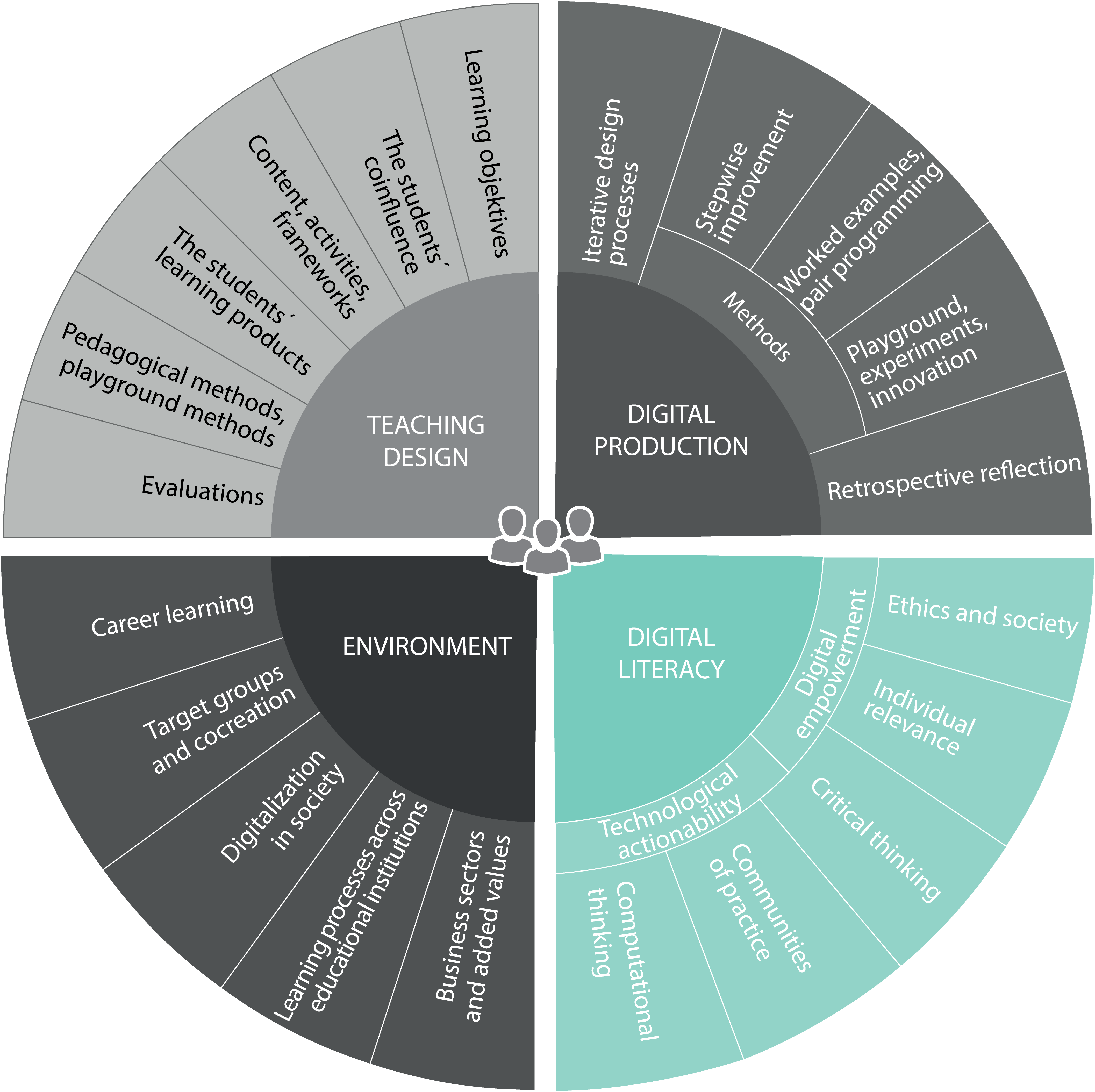
The tech-didactic model ROBOdidactics (Majgaard 2019, vs. 2.0 2020) serves as a joint framework for mutual understanding and development or further development of local teaching processes.
The teaching modules will be applied in the educational programs according to the respective regulations, as well as adapted for co-teaching across the levels. The modules will promote the students’ digital production, digital literacy, and career learning, while incorporating activities related to sustainability (UN Goals) and border-crossing themes.